

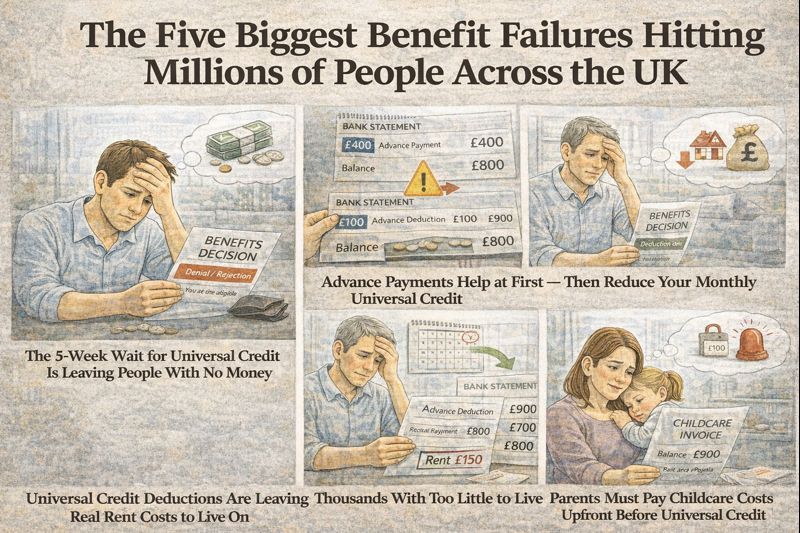
Across the UK, millions of people rely on the benefits system to help them get by during difficult times. This includes people who are out of work, struggling with illness or disability, caring for family members, or simply trying to cope with rising living costs on a low income. In theory, the system is meant to act as a safety net — something that steps in when life becomes unstable.
In reality, many people feel that this safety net is full of holes.
Over the past few years, the cost of living has risen sharply. Rent, food, energy, transport, and basic household bills have all gone up. At the same time, large parts of the benefits system have failed to adjust properly or respond quickly enough. This has left many households feeling trapped, anxious, and constantly behind.
Below are five of the biggest benefit failures currently affecting people across the UK, explained in simple, human English.
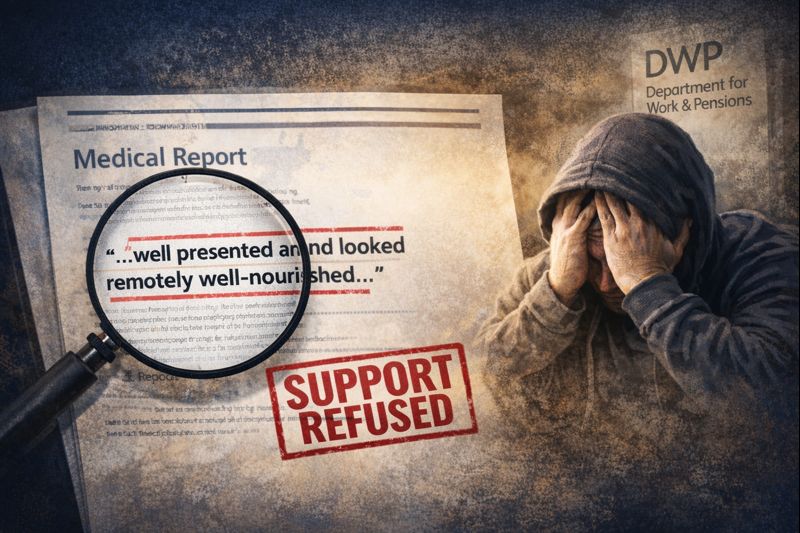
One of the most damaging failures is long delays in benefit decisions**, especially for people who are sick or disabled.
For many claimants, applying for disability-related support is not just stressful — it is exhausting. People often have to fill in long forms, gather medical evidence, attend assessments, and then wait months for a decision. During this waiting period, many receive little or no extra financial help, even though their health may prevent them from working.
These delays can have serious consequences. People fall behind on rent, borrow money just to eat, or rely on food banks and family support. Some are forced to choose between heating their home and buying food. The emotional toll is just as serious. Waiting for months without knowing whether help is coming can worsen anxiety, depression, and existing health conditions.
Even when decisions finally arrive, many people are initially refused support, only to have the decision overturned later after appeals or reviews. This leaves claimants asking a painful question: if the decision was wrong in the end, why were they made to suffer for months first?
Another major failure is housing support that no longer matches real rent costs**.
In many parts of the UK, rent has increased far faster than benefit levels. For people renting privately, the gap between the rent they must pay and the help they receive has grown wider every year. This means people are forced to make up the difference from money meant for food, electricity, or other essentials.
For families, this can be devastating. Parents skip meals so their children can eat. Young people stay in overcrowded or unsafe homes because they cannot afford to move. Others face constant fear of eviction because they are always a few weeks behind on rent.
The situation is especially difficult in cities and high-demand areas, where rents have risen sharply. Even people who are doing everything “right” — paying what they can, communicating with landlords, and budgeting carefully — still find themselves trapped by a system that no longer reflects the real cost of housing.
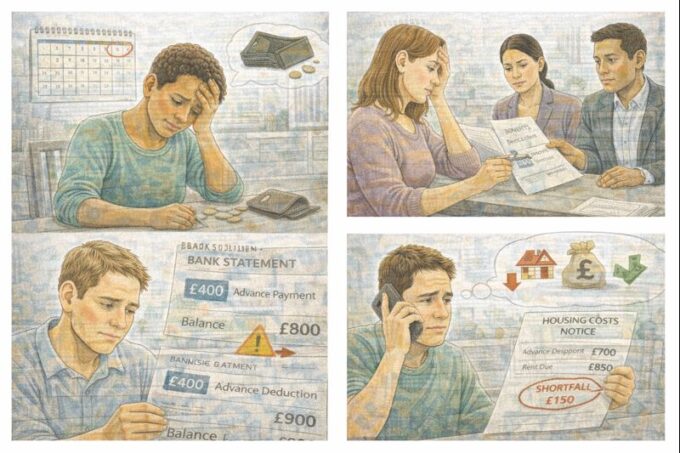
A third major problem is benefit deductions that reduce payments to unlivable levels**.
Many people on benefits see money taken directly from their monthly payments to repay advances, old overpayments, rent arrears, or other debts. While repayment may sound reasonable in principle, the reality is harsh.
When deductions are applied, some people are left with far less than what they need to survive. Monthly payments that already struggle to cover basics are reduced even further. This forces people into a constant cycle of borrowing, skipping bills, or relying on charity.
What makes this worse is that many claimants feel they have little control or understanding over these deductions. Payments can change suddenly, explanations may be unclear, and challenging the deductions can be confusing or slow. For someone already stressed about money, this creates a constant sense of insecurity — never knowing exactly how much they will receive or whether it will be enough to last the month.
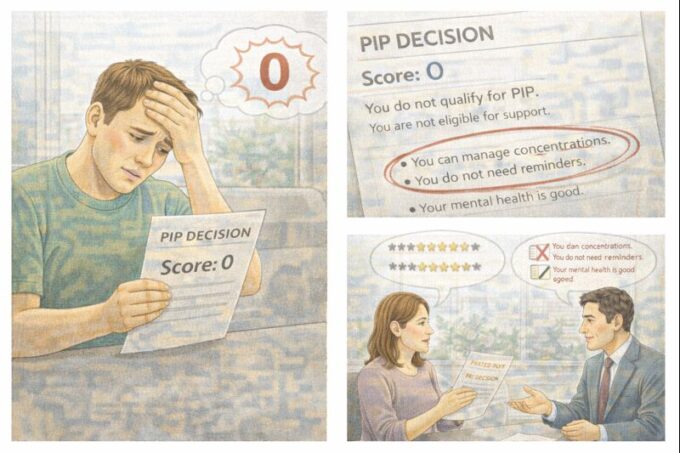
Another failure lies in health-related benefit rules that confuse and disadvantage claimants**.
For people whose ability to work is affected by illness or disability, navigating health-related benefit rules can feel like walking through a maze. Waiting periods, assessments, and strict criteria mean that people often go months without the extra support they need.
Some claimants only discover too late that the timing of their claim affects how much they receive. Others are unaware that missing a deadline, misunderstanding a form, or failing to report a change correctly can cost them hundreds of pounds a month. This is not because they tried to cheat the system, but because the system itself is complicated and poorly explained.
For people dealing with pain, fatigue, mental health problems, or long-term conditions, these complex rules feel deeply unfair. Many say the system expects them to act like legal experts at a time when they are simply trying to cope with day-to-day life.
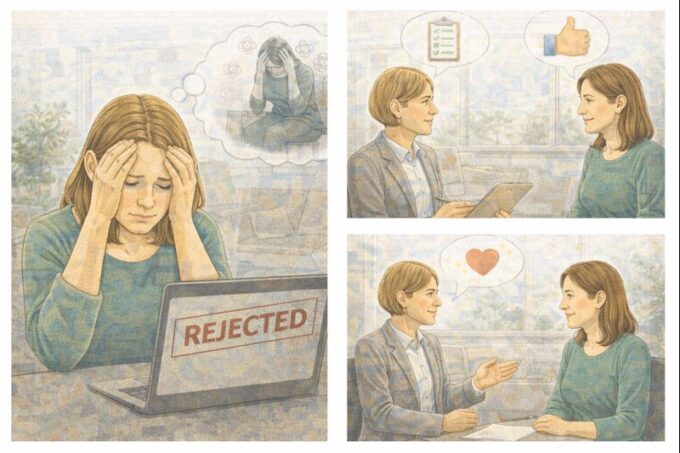
Finally, there is the issue of errors, suspensions, and sudden stoppages of benefits**.
Thousands of people each year experience their benefits being stopped or suspended due to administrative mistakes, data errors, or routine checks. Often, claimants only find out when their payment does not arrive. There may be no warning, no clear explanation, and no quick fix.
For families living month to month, a missed payment can be catastrophic. Rent goes unpaid. Direct debits fail. Bank charges pile up. Stress levels skyrocket. People spend hours on the phone trying to find out what went wrong, only to be told to wait while the issue is reviewed.
Even when payments are later restored, the damage is often already done. Trust in the system is lost, and the fear of it happening again never fully goes away.
Taken together, these five failures paint a clear picture of a benefits system under strain — and often failing the very people it is meant to support.
This is not about people wanting “more than they deserve.” It is about people wanting stability, clarity, and enough support to live with dignity. Most claimants simply want to pay their bills, feed their families, manage their health, and feel secure enough to plan for the future.
When benefits are delayed, reduced, or stopped without warning, it does more than cause financial problems. It creates fear, stress, and a sense of being constantly judged or punished for needing help.
Fixing these issues will not be easy, but ignoring them comes at a high cost — not just to individuals, but to communities, public health, and society as a whole. Until the system becomes faster, fairer, and more realistic about the cost of living, millions of people across the UK will continue to struggle, not because they have failed, but because the system has.






Leave a comment