

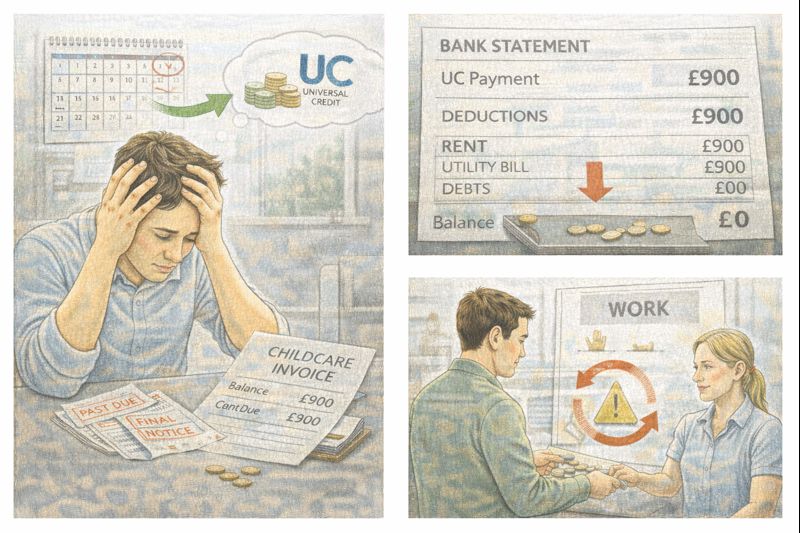
Being on Universal Credit for a long time can wear a person down, especially when they are genuinely trying to find work and still getting nowhere. Many people expect job searching to be hard, but what they do not expect is to feel blamed or spoken to badly by the very people who are meant to support them. That is what is happening in this situation, and it is leaving the claimant feeling stuck, fed up, and powerless.
The person explained that they apply for lots of jobs and regularly show proof of their applications to their employment coach at Petxi, also known as Jobs 22. They are doing what is asked of them, following instructions, and actively trying to get back into work. Despite this, they keep being asked the same question again and again: why are you not getting hired?
From their point of view, that question feels unfair and impossible to answer. They cannot control whether an employer chooses them or not. Many jobs receive dozens or even hundreds of applications, and most people never hear back. Being rejected or ignored is now a normal part of job hunting, not a personal failure. Yet the way the question is asked makes them feel as if they are doing something wrong or not trying hard enough.
What has made the situation worse is the way their employment coach speaks to them. They describe the coach as grumpy and nasty, often talking in a way that feels rude and dismissive. Over time, this has damaged their confidence and made every interaction stressful. They tried to raise this with the Jobcentre and asked to change coach or try a different type of support, but they say they were not listened to. Nothing changed, and they were left feeling trapped in the same situation.
A recent incident pushed things further. On the day of an appointment, the claimant told their employment coach that they could not attend because they needed to take their gran to a hospital appointment. Instead of showing understanding, the coach questioned why and asked what was wrong with her. After the claimant explained, the coach put the phone down. The only response afterward was a short “ok.”
That moment was upsetting. It made the claimant feel judged and disrespected, as if caring for a family member was seen as an excuse rather than a real responsibility. They now feel that their coach believes they are always making excuses, even when they are dealing with genuine family needs. Over time, this has left them feeling worn out and unsure what else they can do.
Sadly, this experience is not unusual. Many Universal Credit claimants say they feel under constant pressure to justify themselves. They are asked to explain things that are outside their control, such as why employers are not hiring them. This can slowly chip away at confidence and mental health, making job searching even harder.
It is important to say clearly that not getting hired does not mean someone is lazy or failing. Applying for jobs is the part a claimant can control. Getting hired is not. The current job market is tough, and rejection is common, even for well-qualified people.
It is also important to remember that claimants have the right to be treated with basic respect. Being spoken to rudely, having personal questions asked in an insensitive way, or having the phone put down is not acceptable behaviour. If an employment coach’s behaviour feels inappropriate, it can be challenged. Writing a calm but clear message in the UC journal explaining how the behaviour made you feel can be a first step. Asking to speak to a supervisor or requesting a formal complaint is also an option if things do not improve.
Family responsibilities matter too. Taking a relative to a hospital appointment is not an excuse, it is part of real life. Universal Credit rules allow for reasonable circumstances, and people are not expected to ignore family care or emergencies.
Some people in similar situations find it helpful to ask for a change in focus. Instead of being pushed to apply for the same types of jobs repeatedly, asking about training, short courses, volunteering, or confidence-building support can sometimes ease pressure and improve long-term chances. These activities can still count as work-related activity and may help break the cycle of constant rejection.
Feeling stuck does not mean nothing can change. It often means the support being given is not the right fit. The system can be rigid, and not every adviser handles their role well. That does not take away from the effort being made by the claimant.
For anyone going through something similar, the most important thing to remember is this: trying your best is enough. Being treated badly is not something you have to accept. Job searching is hard, caring for family is valid, and needing support should never mean being made to feel small or blamed for things you cannot control.










Leave a comment